
Incredible! What an amazing day I had at our recent Empowering Lives Aids Awareness Campaign.
When I arrived the 10 k race had finished and a crowd was gathered around the soccer field of the primary school we had borrowed for the day. Immediately I met the headmaster (Principal) of the school and he was thrilled to have ELI host such an event at this school and community.
The soccer game brought loud cheers as the local teams competed for the winners title. This was another of our strategies to gather a large crowd and rally people to know the devastating effects of AIDS, to get tested ("Know your status"), and to hear of the hope that is available for all through Jesus.
For three days, we held a music worship concert every evening with preaching where we shared the love of Christ and many made a decision to follow Christ.
During the three-day event, a total of 404 people were tested for HIV. Fourteen were positive. (These fourteen will now be receiving free treatment at the AMPATH clinic in Turbo.)
God knows how many lives were touched by the worship and testimonies. Over four thousand people attended one or more of the meetings.
God is good. This is another way that we are helping to reduce the future population of orphans. In the ELI Ilula Children's Home, over 75% of the children are orphaned because of AIDS. This campaign and the many other programs and campaigns we host each year are a vital part of our overall strategy to share the Gospel and change the futures of people and children for the better. Being tested and even just being given the opportunity to be tested is a powerful way to reach people and have them examine their lives, their lifestyles, and their eternal destinies.
Thank you again for your support and prayers.
Serving together,
Don
Saturday, April 29, 2006
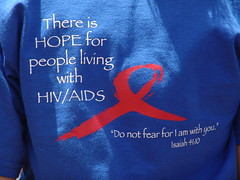

There is Hope
Incredible! What an amazing day I had at our recent Empowering Lives Aids Awareness Campaign.
When I arrived the 10 k race had finished and a crowd was gathered around the soccer field of the primary school we had borrowed for the day. Immediately I met the headmaster (Principal) of the school and he was thrilled to have ELI host such an event at this school and community.
The soccer game brought loud cheers as the local teams competed for the winners title. This was another of our strategies to gather a large crowd and rally people to know the devastating effects of AIDS, to get tested ("Know your status"), and to hear of the hope that is available for all through Jesus.
For three days, we held a music worship concert every evening with preaching where we shared the love of Christ and many made a decision to follow Christ.
During the three-day event, a total of 404 people were tested for HIV. Fourteen were positive. (These fourteen will now be receiving free treatment at the AMPATH clinic in Turbo.)
God knows how many lives were touched by the worship and testimonies. Over four thousand people attended one or more of the meetings.
God is good. This is another way that we are helping to reduce the future population of orphans. In the ELI Ilula Children's Home, over 75% of the children are orphaned because of AIDS. This campaign and the many other programs and campaigns we host each year are a vital part of our overall strategy to share the Gospel and change the futures of people and children for the better. Being tested and even just being given the opportunity to be tested is a powerful way to reach people and have them examine their lives, their lifestyles, and their eternal destinies.
Thank you again for your support and prayers.
Serving together,
Don
When I arrived the 10 k race had finished and a crowd was gathered around the soccer field of the primary school we had borrowed for the day. Immediately I met the headmaster (Principal) of the school and he was thrilled to have ELI host such an event at this school and community.
The soccer game brought loud cheers as the local teams competed for the winners title. This was another of our strategies to gather a large crowd and rally people to know the devastating effects of AIDS, to get tested ("Know your status"), and to hear of the hope that is available for all through Jesus.
For three days, we held a music worship concert every evening with preaching where we shared the love of Christ and many made a decision to follow Christ.
During the three-day event, a total of 404 people were tested for HIV. Fourteen were positive. (These fourteen will now be receiving free treatment at the AMPATH clinic in Turbo.)
God knows how many lives were touched by the worship and testimonies. Over four thousand people attended one or more of the meetings.
God is good. This is another way that we are helping to reduce the future population of orphans. In the ELI Ilula Children's Home, over 75% of the children are orphaned because of AIDS. This campaign and the many other programs and campaigns we host each year are a vital part of our overall strategy to share the Gospel and change the futures of people and children for the better. Being tested and even just being given the opportunity to be tested is a powerful way to reach people and have them examine their lives, their lifestyles, and their eternal destinies.
Thank you again for your support and prayers.
Serving together,
Don
Wednesday, March 29, 2006
Celebrate!
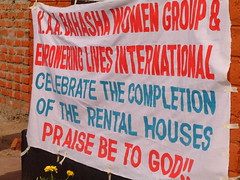
Yesterday, ELI celebrated with a group of ladies who used to brew potent alcohol for a living until ELI offered them a way out by making paper.
The ladies worked hard and a group of 37 decided in the end to pool their money and build rental units.
With the help of ELI friends, two of the three houses were officially opened yesterday.
Click on the photo to see more of the celebration.
The ladies worked hard and a group of 37 decided in the end to pool their money and build rental units.
With the help of ELI friends, two of the three houses were officially opened yesterday.
Click on the photo to see more of the celebration.
Saturday, March 25, 2006
Celebrate!
Yesterday, ELI celebrated with a group of ladies who used to brew potent alcohol for a living until ELI offered them a way out by making paper.
The ladies worked hard and a group of 37 decided in the end to pool their money and build rental units.
With the help of ELI friends, two of the three houses were officially opened yesterday.
Click on the photo to see more of the celebration.
Sunday, March 19, 2006
Update from Tanzania
I just received the following text message from Don in Tanzania:
"Good, long day. One hundred and ten came forward for prayer at our afternoon meeting. Over 300 now watching the Jesus film! Powerful day for ministry. Bricks for classroom now half way."
Please continue to pray for the men who are in Tanzania, for continued health, energy and protection.
"Good, long day. One hundred and ten came forward for prayer at our afternoon meeting. Over 300 now watching the Jesus film! Powerful day for ministry. Bricks for classroom now half way."
Please continue to pray for the men who are in Tanzania, for continued health, energy and protection.
Friday, March 17, 2006
Empowering Women of Kenya, Africa
Today, the women from Victory Highway went to fellowship with the ladies of a nearby village called Plateau. This entire village has been transformed by God through the ministry of Empowering Lives.
Here's the story, as told by Don Rogers.
GOD'S PROVIDENCE
While living in the village here in Kenya, my wife Amy and I were buying some supplies at a store in the closest major town called Eldoret. While walking towards the entrance, I was walking by two wazungu (white) women when I heard one of them say, "midwife training..." We were just arranging for such a training ourselves in another village, so I stopped and asked them about the training they referred to. They told me that the teacher was inside, so I waited there for her to come. Her name is Mary, and she is the wife of a village chief in Plateau, Kenya.
After talking about the midwife training, Mary told me that she and her husband have been praying for some way to combat the terrible alcoholism that has a hold on the men and women of their village. We (ELI-Kenya) had established an anti-alcohol program the year before, so after sharing with her we agreed that as soon as possible our national leader (Pastor Philip Rono) would visit their village and share the program with the chief.
FIRST MEETING IN PLATEAU
Within a few weeks, Pastor Rono visited Plateau. He thought he was going to talk with the Chief (which he did), but the chief had also invited most of the people from the village - including many of the women who were brewing alcohol and selling it for a source of income. The brew is called Changaa which means "Kill me quick!"
Changaa is actually a powerful and dangerous brew that the women make using fermented corn. Many of the women hate the alcohol and the effects of it, but they have so few sources of income that they feel they have no options in order to be able to buy food and pay school fees for their children.
Pastor Rono shared from his heart and shared his faith in Christ as well. Jesus is the higher power, he shared, and told them that there were steps that they could take to change their lives and come out from the disease of alcohol.
There was an immediate response, and within four months there were over a hundred people meeting regularly in small accountability groups - all becoming sober - taking it one day at a time - and learning about the love of Christ through the program. Within a year, over three hundred people were in the program and we were seeing regular conversions take place as we use the scriptures along with the 12 steps and we recognize Jesus is the higher power.
BAHASHA (ENVELOPE) WOMEN'S GROUP - 37 DETERMINED LADIES
Among the women who were brewing were many who desired to leave alcohol and to stop brewing and selling. However, they couldn't do this unless they had an alternate source of income. This is where ELI came in again. We offered them a short-term opportunity to work making and packaging hand-made paper which ELI would export to the USA and make available for a donation.
Thirty-seven of the women organized themselves and made paper for about a year and a half. This income was helpful but they (along with ELI ) desired that they have their own independent business. During the course of the paper program, ELI had encouraged the women to establish their own savings program which many of them did.
After much discussion and planning, the 37 women of the BAHASHA WOMEN'S GROUP each received a grant to help them establish their own business. But rather than invest their money independently, these women decided that they could do far more together than they could individually. They pooled ALL of their savings as well as the grant money from ELI and purchased property close to the city but not far from their village of Plateau. They set off to build their own rental units (three rooms) on a quarter acre.
Fencing and construction began immediately and enthusiasm was high. Soon, however, the cost of construction and living caught up with their savings and their financial resources were depleted. For a year and a half, the women continued to struggle but they have not been able to get ahead due to the high level of poverty and high costs of food and school fees.
Though the construction had stopped they have never given up hope.
Recently, I was in the USA and made a visit to ELI supporters and friends. Among the many reports of ministry progress, I shared with one couple about the needs and hopes of this women's group. This couple contacted me within a day and encouraged me to find others who would match a $1,000 gift that they would be willing to invest towards helping the women's group continue their dream of having the rental units completed.
God is good! After several months of sharing, I was encouraged by several individuals who contributed, and the first couple kept their commitment as well.
CONSTRUCTION IS UNDERWAY
The construction is now continuing and the women of Plateau could not be more thrilled.
Next week, a women's church team from upstate NY will be working side by side with these women - painting, landscaping, sewing curtains and more. By the end of March one or more of these rental rooms will be completely finished and the ladies will then become landlords and income earners.
This is what empowering lives is all about: sharing Gods love in Word and in action! As this project continues there is no question in the minds of this dynamic women's group in Kenya - it is God who supplies according to His great power and blessing.
A special thank you goes to those of you who have participated in supporting this effort and other ministries of Empowering Lives International. If you would like to be a part of helping the women add to their rental structure or another similar project of ELI please contact Empowering Lives.
Together we can make a world of difference - one life at a time!
Here's the story, as told by Don Rogers.
GOD'S PROVIDENCE
While living in the village here in Kenya, my wife Amy and I were buying some supplies at a store in the closest major town called Eldoret. While walking towards the entrance, I was walking by two wazungu (white) women when I heard one of them say, "midwife training..." We were just arranging for such a training ourselves in another village, so I stopped and asked them about the training they referred to. They told me that the teacher was inside, so I waited there for her to come. Her name is Mary, and she is the wife of a village chief in Plateau, Kenya.
After talking about the midwife training, Mary told me that she and her husband have been praying for some way to combat the terrible alcoholism that has a hold on the men and women of their village. We (ELI-Kenya) had established an anti-alcohol program the year before, so after sharing with her we agreed that as soon as possible our national leader (Pastor Philip Rono) would visit their village and share the program with the chief.
FIRST MEETING IN PLATEAU
Within a few weeks, Pastor Rono visited Plateau. He thought he was going to talk with the Chief (which he did), but the chief had also invited most of the people from the village - including many of the women who were brewing alcohol and selling it for a source of income. The brew is called Changaa which means "Kill me quick!"
Changaa is actually a powerful and dangerous brew that the women make using fermented corn. Many of the women hate the alcohol and the effects of it, but they have so few sources of income that they feel they have no options in order to be able to buy food and pay school fees for their children.
Pastor Rono shared from his heart and shared his faith in Christ as well. Jesus is the higher power, he shared, and told them that there were steps that they could take to change their lives and come out from the disease of alcohol.
There was an immediate response, and within four months there were over a hundred people meeting regularly in small accountability groups - all becoming sober - taking it one day at a time - and learning about the love of Christ through the program. Within a year, over three hundred people were in the program and we were seeing regular conversions take place as we use the scriptures along with the 12 steps and we recognize Jesus is the higher power.
BAHASHA (ENVELOPE) WOMEN'S GROUP - 37 DETERMINED LADIES
Among the women who were brewing were many who desired to leave alcohol and to stop brewing and selling. However, they couldn't do this unless they had an alternate source of income. This is where ELI came in again. We offered them a short-term opportunity to work making and packaging hand-made paper which ELI would export to the USA and make available for a donation.
Thirty-seven of the women organized themselves and made paper for about a year and a half. This income was helpful but they (along with ELI ) desired that they have their own independent business. During the course of the paper program, ELI had encouraged the women to establish their own savings program which many of them did.
After much discussion and planning, the 37 women of the BAHASHA WOMEN'S GROUP each received a grant to help them establish their own business. But rather than invest their money independently, these women decided that they could do far more together than they could individually. They pooled ALL of their savings as well as the grant money from ELI and purchased property close to the city but not far from their village of Plateau. They set off to build their own rental units (three rooms) on a quarter acre.
Fencing and construction began immediately and enthusiasm was high. Soon, however, the cost of construction and living caught up with their savings and their financial resources were depleted. For a year and a half, the women continued to struggle but they have not been able to get ahead due to the high level of poverty and high costs of food and school fees.
Though the construction had stopped they have never given up hope.
Recently, I was in the USA and made a visit to ELI supporters and friends. Among the many reports of ministry progress, I shared with one couple about the needs and hopes of this women's group. This couple contacted me within a day and encouraged me to find others who would match a $1,000 gift that they would be willing to invest towards helping the women's group continue their dream of having the rental units completed.
God is good! After several months of sharing, I was encouraged by several individuals who contributed, and the first couple kept their commitment as well.
CONSTRUCTION IS UNDERWAY
The construction is now continuing and the women of Plateau could not be more thrilled.
Next week, a women's church team from upstate NY will be working side by side with these women - painting, landscaping, sewing curtains and more. By the end of March one or more of these rental rooms will be completely finished and the ladies will then become landlords and income earners.
This is what empowering lives is all about: sharing Gods love in Word and in action! As this project continues there is no question in the minds of this dynamic women's group in Kenya - it is God who supplies according to His great power and blessing.
A special thank you goes to those of you who have participated in supporting this effort and other ministries of Empowering Lives International. If you would like to be a part of helping the women add to their rental structure or another similar project of ELI please contact Empowering Lives.
Together we can make a world of difference - one life at a time!
Sunday, March 05, 2006
Sudan: Looking Back (and Looking Ahead)
Yesterday, Don showed photos from Sudan to our children at Ilula. Many committed to pray for their neighbors. They cheered time and again when they realized how God is using ELI in Kolmorek, Sudan.
Juli wrote the following piece about her visit to our neighbors to the north:
The Story Continues...
“Open your mouth for the speechless, in the cause of all who are appointed to die. Open your mouth, judge righteously. And plead the cause of the poor & the needy” (Proverbs 31:8-9).
These are the words that resonate in my mind & my heart as I consider my journey to Southern Sudan. Over the past 11⁄2 years, through the vision & life of my friend, a Sudanese refugee named Stephen Reech, God has allowed my eyes to be opened and my heart to be softened towards the brokenness within the land of Sudan.
A Time to Return, A Time to Rebuild...
As I traveled along dirt paths through the desolate countryside of Sudan, I wondered what the place was like before the war. I also considered what it will be like after the masses return from their time in exile. There is a generation of children and adolescents who have lived their entire lives as refugees.
As a ministry, ELI’s vision is to empower the poor and oppressed that they may be able to know, worship, & serve God without hindrance. As the Sudanese return to their homeland, remnants of the war remain, and the Sudanese vulnerably fight to survive: physically, emotionally, & spiritually. After much prayer and consideration, it has been more than evident to the leadership of ELI that God is expanding the ministry and leading us to be a part of bringing His hope into the rebuilding & development of Southern Sudan.
On Sunday, our team had the privilege to attend one of the churches that Stephen had helped start before the war. As I listened to the Sudanese sing their songs of worship, I did not hear the sounds of celebration that I am accustomed to hearing in Kenya.
Although I could not understand the words they were saying, I deeply felt the cry of a people who were intensely and desperately, from the depths of their lives, calling out to God. As I was confronted with the beauty & the brokenness of this people, I was moved with compassion.
In a country where the governmental infrastructure is, at best, weak, there are many challenges to be faced. Within the area of health, resources are scarce and disease is rampant. There are major public health crises because of the mass number of returnees living in overpopulated camps as they await relocation.
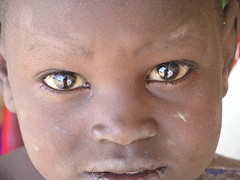
Refugees are returning from Ethiopia, Uganda, & Kenya as well as areas of hiding throughout Southern Sudan. Cholera and yellow fever outbreaks as well as severe malnutrition amongst children are prevalent throughout the area. I visited several cattle camps where children are raised outdoors amongst thousands of cows. The children survive only off of the milk of their cattle. The eyes & faces of the children were covered with dirt and flies.
One of the major health problems throughout Southern Sudan is blindness caused by an easily preventable bacterial infection known as Trachoma. Throughout my time in Sudan, it was clear there is an abundant for the implementation of health programs, both preventative and curative.
In May, I am planning to return to Sudan with a team of healthcare workers from Kenya. As I have shared about the experiences I had in Sudan with my co-workers in Kenya, they have expressed the desire to go and share their knowledge and services with the people of Sudan. It is exciting to see those who have been empowered in Kenya desiring to be a part of empowering people in other parts of the world. In order for this trip & ministry to be possible, we need to raise nearly $10,000.
If God would lead you to join us financially in ministering to the sick in Sudan, please make your check to ELI & note that it is for “Health in Sudan”. In advance, I thank you for your partnership.
Praying for Peace...
As I have left Sudan and returned to my home in Kenya, there are many images and experiences that fill my mind. I cannot forget the 18-month old, severely malnourished, baby that sat naked on my lap as I visited a refugee camp. Although his life has started with so many odds against him, he is a part of the generation that is the future of the new Sudan.
I will also remember the words of Abraham, a 26 year old, who found God in the midst of exile. He explained, “I had lost my family when I left Sudan, and I kept asking myself: ‘who is my guide?’ When I was sick and did not have medicine, I asked myself: ‘who is my healer?’” Surely it was God.
And I still hear the fervor in the voices of the Sudanese as they chanted, “Exile is over. Exile is over. Exile is over.”
In a way that I’ve never understood to pray before, I pray that the Lord will make His face to shine upon Sudan. There is much forgiveness needed for healing to take place. Oh, I pray for peace.
Juli wrote the following piece about her visit to our neighbors to the north:
The Story Continues...
“Open your mouth for the speechless, in the cause of all who are appointed to die. Open your mouth, judge righteously. And plead the cause of the poor & the needy” (Proverbs 31:8-9).
These are the words that resonate in my mind & my heart as I consider my journey to Southern Sudan. Over the past 11⁄2 years, through the vision & life of my friend, a Sudanese refugee named Stephen Reech, God has allowed my eyes to be opened and my heart to be softened towards the brokenness within the land of Sudan.
A Time to Return, A Time to Rebuild...
As I traveled along dirt paths through the desolate countryside of Sudan, I wondered what the place was like before the war. I also considered what it will be like after the masses return from their time in exile. There is a generation of children and adolescents who have lived their entire lives as refugees.
As a ministry, ELI’s vision is to empower the poor and oppressed that they may be able to know, worship, & serve God without hindrance. As the Sudanese return to their homeland, remnants of the war remain, and the Sudanese vulnerably fight to survive: physically, emotionally, & spiritually. After much prayer and consideration, it has been more than evident to the leadership of ELI that God is expanding the ministry and leading us to be a part of bringing His hope into the rebuilding & development of Southern Sudan.
On Sunday, our team had the privilege to attend one of the churches that Stephen had helped start before the war. As I listened to the Sudanese sing their songs of worship, I did not hear the sounds of celebration that I am accustomed to hearing in Kenya.
Although I could not understand the words they were saying, I deeply felt the cry of a people who were intensely and desperately, from the depths of their lives, calling out to God. As I was confronted with the beauty & the brokenness of this people, I was moved with compassion.
In a country where the governmental infrastructure is, at best, weak, there are many challenges to be faced. Within the area of health, resources are scarce and disease is rampant. There are major public health crises because of the mass number of returnees living in overpopulated camps as they await relocation.
Refugees are returning from Ethiopia, Uganda, & Kenya as well as areas of hiding throughout Southern Sudan. Cholera and yellow fever outbreaks as well as severe malnutrition amongst children are prevalent throughout the area. I visited several cattle camps where children are raised outdoors amongst thousands of cows. The children survive only off of the milk of their cattle. The eyes & faces of the children were covered with dirt and flies.
One of the major health problems throughout Southern Sudan is blindness caused by an easily preventable bacterial infection known as Trachoma. Throughout my time in Sudan, it was clear there is an abundant for the implementation of health programs, both preventative and curative.
In May, I am planning to return to Sudan with a team of healthcare workers from Kenya. As I have shared about the experiences I had in Sudan with my co-workers in Kenya, they have expressed the desire to go and share their knowledge and services with the people of Sudan. It is exciting to see those who have been empowered in Kenya desiring to be a part of empowering people in other parts of the world. In order for this trip & ministry to be possible, we need to raise nearly $10,000.
If God would lead you to join us financially in ministering to the sick in Sudan, please make your check to ELI & note that it is for “Health in Sudan”. In advance, I thank you for your partnership.
Praying for Peace...
As I have left Sudan and returned to my home in Kenya, there are many images and experiences that fill my mind. I cannot forget the 18-month old, severely malnourished, baby that sat naked on my lap as I visited a refugee camp. Although his life has started with so many odds against him, he is a part of the generation that is the future of the new Sudan.
I will also remember the words of Abraham, a 26 year old, who found God in the midst of exile. He explained, “I had lost my family when I left Sudan, and I kept asking myself: ‘who is my guide?’ When I was sick and did not have medicine, I asked myself: ‘who is my healer?’” Surely it was God.
And I still hear the fervor in the voices of the Sudanese as they chanted, “Exile is over. Exile is over. Exile is over.”
In a way that I’ve never understood to pray before, I pray that the Lord will make His face to shine upon Sudan. There is much forgiveness needed for healing to take place. Oh, I pray for peace.
Friday, February 24, 2006
The Heart of Worship
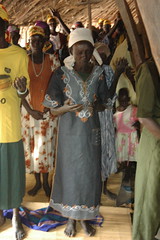
Worship in a rural African church is often one of the purest worship experiences. People come pouring their hearts out to the One they worship and expecting God to move.
Click on the photo to see a few more of the photos from Sudan.
Click on the photo to see a few more of the photos from Sudan.
Steven Reech
I am Stephen Reech, and I am from the Dinka tribe. I was born in 1964 in Kolmarek village, near the town of Bor in Southern Sudan. My father, who was the chief of our village, had several wives.
My great-grandfather was named Akuak. He is remembered to this day by the Abordit community because of his bravery during the colonial period. When the Turks and Arabs tried to arrest the Africans and sell them into slavery, Akuak resisted and defended his people. The merchants were so annoyed by the chief’s stand that they murdered him in the nearby Biong forest. Again the Arabs attempted to take the Africans to be slaves, but the spirit of resistance had been planted by Akuak, and they did not succeed.
Out of respect for Akuak’s great service, the community carried his body to bury him within his compound. Because Akuak had given his life to save the Abordit people, the community compensated his family with cows and erected a shrine at his gravesite. The shrine was a place of worship and prayer. Each year, the Dinka would visit Akuak’s shrine to offer the first harvest to be used by Akuak’s children and any first-born sons in the lineage of Akuak. The descendents of Akuak, in return, sacrificed a white cow each year to ask for rain and success for the community.
And so it was that when I was growing up, my family believed Akuak’s spirit was alive, and he was concerned with our welfare. We invited his spirit during the ceremony of slaughtering the white cow. It was believed that Akuak’s spirit could speak through an honest person whose ways were upright before the gods and would assure them of rain, peace and a good harvest.
In 1979, while in primary school, I put my faith in Christ and abandoned the worship of the spirits and other gods. I believed Jesus Christ—not Akuak—to be my Redeemer. At first, my family—who were viewed representatives of the redeemer Akuak—did not realize the seriousness of my new belief, nor the implications it would have on our family.
I attended church with my cousin, Daniel Reech, for five years without any challenges from our extended family. In 1984, I heard the call from God to serve him as a pastor, but I tried to avoid this because I feared the elderly would not take me seriously. I was after all, a young man, and everyone knew that my family was deeply rooted in idolatry. But there was a gentle voice telling me not to fear for He would be with me—I only needed to be faithful and obedient.
This was the beginning of a new chapter in my life: a life of rejection, faith, perseverance, and success.
My cousin Daniel and I decided to start preaching the Good News to our family members first. The message we carried was that God was the provider of rain, peace and good harvests. We preached that prosperity did not come from straining to please the spirit of Akuak, but rather, they should trust in God through Jesus Christ who died and was resurrected to redeem the world.
This message was rejected by many of our family members and the community at large. They opposed our teachings and claimed that our going against the spirit of Akuak would bring disaster to our family as well as to the whole community. They resolved that we should be excommunicated so that the community could evade destruction from the spirits and gods. Even our friends and relatives deserted us.
This opposition and rejection drew us closer to God in prayer and worship.
Our families thought that we were mad and others said we had bad luck and needed to be cleansed. We denied all these claims and told them boldly that the problem was that they did not understand the Word of God. In an attempt to stop us from preaching the Good News, which they termed as heresy, the elders reported to the Sudanese People’s Liberation Army (SPLA) commander that, by preaching a new religion and a new redeemer called Jesus, we were a danger to the peace of the society. They requested the military leaders to enroll us in the military to remove us from the village and to so that we could die in the war.
I praise God that the SPLA—as a military movement in opposition to the imposing of Islamic beliefs to the people of Southern Sudan—preferred Christian beliefs and disagreed with the elders. The community leaders kept insisting that we join the military because we were young and a nuisance to the society.
Eventually, Daniel and I were drafted into the SPLA. Because of illness, I was released but Daniel went to military training camp. The elders did not accept this and convinced one military captain to beat me so that I would change my mind and rejoin the military. I was beaten almost to the point of death; and when I was set free, I was bleeding and urinating blood. People thought that I would die, but I was up in two weeks’ time. God had healed me.
The healing I received from God made me preach the Gospel more courageously without any fear or doubt that God was with me. I knew this was His mission. This is a time I witnessed many people coming to Christ. People said, “If Stephen did not die, for sure his God is able.”
A small church started, and when we prayed for the sick, God did miracles to heal them. In fact, the son of my uncle who was in charge of the Akuak shrine, became very sick. After trying in vain to treat him through praying to their gods for healing, my aunt brought the young boy to the church. I led the church in a prayer of faith and instructed the mother to take the child home to rest because God had healed him. The next day, my aunt reported that there was great improvement in the health of my nephew John.
John was given a new name, John Mathung. The word mathung means “the grave” because the people believed he escaped the grave. After witnessing the power of God, several of my relatives including my brothers and their wives were saved. John’s healing made his parents and many others to believe in Jesus. John’s parents burned the idols erected within their home but spared the Akuak shrine because it belonged to the community. They moved the site of the shrine to another place.
Sadly, not all my brothers turned to Christ after this incident. My older brothers feared the wrath of the community if they, as leaders of the priesthood family, refused to worship Akuak and other gods.
My mother, too, was not yet a believer, but one day she was sick and when I went to her house to see how to help, God impressed on me to pray only after the idols in the house had been destroyed. Immediately I started burning the idols which had been erected in the house and the compound. Then I prayed for my mother, and the next morning she was well and made a decision to follow Christ.
As a result of my mother’s healing and faith decision, two of my stepmothers, two of my aunts and two of my sisters came to faith in Christ within the next month.
By 1990, I had destroyed many idols in our extended family, but the Akuak shrine remained. One night, God revealed to me that the Akuak shrine was the stronghold for idolatry in our community. Upon realizing this, I set the shrine on fire that night. When the people awoke the next morning and discovered that the shrine was in ashes, they assembled at the site. I anticipated that I would be killed, but praise God the women only brought food to appease Akuak’s spirit, and the men decided to go to the commissioner to report the incident. I was arrested and locked up in Kolmarek jail for one week until the case would be heard.
At the hearing, the commissioner and other senior officials of the SPLA were present. The worshipers of Akuak came with objects signifying their beliefs, and the Christians came with flags bearing the cross. The Christians sang songs in praise of Jesus while the other group sang songs in praise of Akuak as well as to the other gods.
When the community leaders explained their accusations against me, God gave me the wisdom to defend my actions. I argued that, since the land where Akuak’s shrine was erected belonged to my family and my uncle who was in charge as the last born son of my grandfather had been saved, it was wise to destroy the shrine. I said that if anyone wanted to erect the shrine it should be in their own land.
The commissioner and his panel ruled in my favor saying that it was against the policies of the SPLA to force an individual or family to worship or to have a shrine that is contrary to their beliefs. The commissioner advised the leaders to erect the shrine within the same location, and I was instructed not to interfere. I was advised to build a church 100 meters away from the shrine.
The leaders agreed to rebuild the shrine and insisted that I pay a cow to be sacrificed, but the panel passed that the community leaders would have to give their own cow for the sacrifice. The Christians were not to be forced to participate. After being released, I went back to Kolmarek and served as the pastor of 3 churches within our village.
This was not the end of the war between the community leaders and myself. They insisted that I join the military and leave them in peace to worship their gods.
In October of 1990, the leaders succeeded to convince one military commander to take me to the military camp. It was very unfortunate, because I had been married to my wife Elizabeth for only one month. When I was taken to the military camp, my wife moved to Torit which is approximately 20 miles away from the military camp in which I was staying. At the military camp, the leader learned that I was forced to join the military in order to stop me from preaching the Gospel. Because the leader believed in Christ Jesus, he set me free.
Upon being released from the military camp, I traveled to Torit to see my wife. From there, I traveled to Bor to assess the situation before taking my wife back to Kolmarek. When I arrived in Bor, the Arabs and other SPLA opponents had attacked the region. They had killed thousands of civilians, looted property, stolen cows and burned the houses. I quickly ran back to safety in Torit and remained there 2 more days until the SPLA had driven back the Arabs.
In 1991, I worked as the pastor in charge of the Bor Pentecostal Churches. Since the Arabs had destroyed all of the property and food, famine struck and many people lost their lives. In search of safety and food, thousands traveled to Uganda, Kenya, and Ethiopia. To save our lives, my wife and I lived along the the Nile River for a period of 8 months. We ate fish to survive.
In December of 1992, we traveled by foot for one-and-a-half months to the border of Uganda. Along the way, we ate leaves and wild fruits. In Uganda, we lived in the Koboko refugee camp. Within the camp, I preached and worked as the chairman of the Dinka community.
While in the camp, due to disease, we lost two sons. In 1995, my wife and I moved to Kenya. My wife lived in the Kakuma refugee camp while I attended Bible School. At Kakuma refugee camp, I mobilized Sudanese Christians to fellowship together which grew to be the Sudan Pentecostal Church.
Our son Mayen was born in Kakuma. He was very sick; and if it were not for God, we would have lost him, too. When I see Mayen playing with his sister Mercy, it reminds me what a good God we serve. Elizabeth, my wife, stayed in Kakuma for 2 years and was blessed to receive a scholarship to study tailoring near the Bible school I was attending. We faced many challenges, but God provided for our needs. We were able to complete our studies.
In 2000, we had planned to return to Sudan, but God blessed us with a farm in the government forest where my family was able to live and farm for 1 year. The harvest provided enough food to last for 2 years. In 2003, I joined the African Inland Church Missionary College. The community development course was of utmost interest to me. Within it, I learned ways to break the cycles of poverty in our churches and communities back in Sudan. I had a vision to initiate programs to train people on spiritual and physical matters to break cycles of poverty amongst pastors, believers, and the community. To accomplish this vision, I registered the Upper Nile Christian Development Organization with the aim of training our communities with new skills of farming, new technologies and with spiritual development to encourage those coming back to Sudan to move beyond the past and to start a new life of love and forgiveness between Christians and Muslims.
My community development teacher, Samuel Teimuge, introduced me to Empowering Lives International, a missions organization that already had the same vision as mine. We agreed to partner together as Empowering Lives Sudan to better the lives of the people of Sudan in this period of peace.
After 13 years of exile, in January of 2005, the peace treaty was being signed; and I returned home to Sudan to visit. I was very sad and broken when I witnessed the suffering of my people. The children are naked, hungry and many are sick. I traveled with a Kenyan named Micah, and he was shocked by the sights he was seeing. After 3 months, with the partnership of Empowering Lives, I returned to Sudan to start the rebuilding process. I built two small huts and fenced seven acres that will be used to build the training center and a demonstration farm. In addition, I planted 24 mango trees on the farm and raised a nursery bed to be able to plant indigenous trees. In the future, it is my prayer and plan to build a mission clinic at the site where the Akuak shrine once was situated.
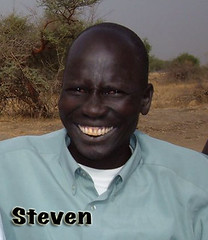
My great-grandfather was named Akuak. He is remembered to this day by the Abordit community because of his bravery during the colonial period. When the Turks and Arabs tried to arrest the Africans and sell them into slavery, Akuak resisted and defended his people. The merchants were so annoyed by the chief’s stand that they murdered him in the nearby Biong forest. Again the Arabs attempted to take the Africans to be slaves, but the spirit of resistance had been planted by Akuak, and they did not succeed.
Out of respect for Akuak’s great service, the community carried his body to bury him within his compound. Because Akuak had given his life to save the Abordit people, the community compensated his family with cows and erected a shrine at his gravesite. The shrine was a place of worship and prayer. Each year, the Dinka would visit Akuak’s shrine to offer the first harvest to be used by Akuak’s children and any first-born sons in the lineage of Akuak. The descendents of Akuak, in return, sacrificed a white cow each year to ask for rain and success for the community.
And so it was that when I was growing up, my family believed Akuak’s spirit was alive, and he was concerned with our welfare. We invited his spirit during the ceremony of slaughtering the white cow. It was believed that Akuak’s spirit could speak through an honest person whose ways were upright before the gods and would assure them of rain, peace and a good harvest.
In 1979, while in primary school, I put my faith in Christ and abandoned the worship of the spirits and other gods. I believed Jesus Christ—not Akuak—to be my Redeemer. At first, my family—who were viewed representatives of the redeemer Akuak—did not realize the seriousness of my new belief, nor the implications it would have on our family.
I attended church with my cousin, Daniel Reech, for five years without any challenges from our extended family. In 1984, I heard the call from God to serve him as a pastor, but I tried to avoid this because I feared the elderly would not take me seriously. I was after all, a young man, and everyone knew that my family was deeply rooted in idolatry. But there was a gentle voice telling me not to fear for He would be with me—I only needed to be faithful and obedient.
This was the beginning of a new chapter in my life: a life of rejection, faith, perseverance, and success.
My cousin Daniel and I decided to start preaching the Good News to our family members first. The message we carried was that God was the provider of rain, peace and good harvests. We preached that prosperity did not come from straining to please the spirit of Akuak, but rather, they should trust in God through Jesus Christ who died and was resurrected to redeem the world.
This message was rejected by many of our family members and the community at large. They opposed our teachings and claimed that our going against the spirit of Akuak would bring disaster to our family as well as to the whole community. They resolved that we should be excommunicated so that the community could evade destruction from the spirits and gods. Even our friends and relatives deserted us.
This opposition and rejection drew us closer to God in prayer and worship.
Our families thought that we were mad and others said we had bad luck and needed to be cleansed. We denied all these claims and told them boldly that the problem was that they did not understand the Word of God. In an attempt to stop us from preaching the Good News, which they termed as heresy, the elders reported to the Sudanese People’s Liberation Army (SPLA) commander that, by preaching a new religion and a new redeemer called Jesus, we were a danger to the peace of the society. They requested the military leaders to enroll us in the military to remove us from the village and to so that we could die in the war.
I praise God that the SPLA—as a military movement in opposition to the imposing of Islamic beliefs to the people of Southern Sudan—preferred Christian beliefs and disagreed with the elders. The community leaders kept insisting that we join the military because we were young and a nuisance to the society.
Eventually, Daniel and I were drafted into the SPLA. Because of illness, I was released but Daniel went to military training camp. The elders did not accept this and convinced one military captain to beat me so that I would change my mind and rejoin the military. I was beaten almost to the point of death; and when I was set free, I was bleeding and urinating blood. People thought that I would die, but I was up in two weeks’ time. God had healed me.
The healing I received from God made me preach the Gospel more courageously without any fear or doubt that God was with me. I knew this was His mission. This is a time I witnessed many people coming to Christ. People said, “If Stephen did not die, for sure his God is able.”
A small church started, and when we prayed for the sick, God did miracles to heal them. In fact, the son of my uncle who was in charge of the Akuak shrine, became very sick. After trying in vain to treat him through praying to their gods for healing, my aunt brought the young boy to the church. I led the church in a prayer of faith and instructed the mother to take the child home to rest because God had healed him. The next day, my aunt reported that there was great improvement in the health of my nephew John.
John was given a new name, John Mathung. The word mathung means “the grave” because the people believed he escaped the grave. After witnessing the power of God, several of my relatives including my brothers and their wives were saved. John’s healing made his parents and many others to believe in Jesus. John’s parents burned the idols erected within their home but spared the Akuak shrine because it belonged to the community. They moved the site of the shrine to another place.
Sadly, not all my brothers turned to Christ after this incident. My older brothers feared the wrath of the community if they, as leaders of the priesthood family, refused to worship Akuak and other gods.
My mother, too, was not yet a believer, but one day she was sick and when I went to her house to see how to help, God impressed on me to pray only after the idols in the house had been destroyed. Immediately I started burning the idols which had been erected in the house and the compound. Then I prayed for my mother, and the next morning she was well and made a decision to follow Christ.
As a result of my mother’s healing and faith decision, two of my stepmothers, two of my aunts and two of my sisters came to faith in Christ within the next month.
By 1990, I had destroyed many idols in our extended family, but the Akuak shrine remained. One night, God revealed to me that the Akuak shrine was the stronghold for idolatry in our community. Upon realizing this, I set the shrine on fire that night. When the people awoke the next morning and discovered that the shrine was in ashes, they assembled at the site. I anticipated that I would be killed, but praise God the women only brought food to appease Akuak’s spirit, and the men decided to go to the commissioner to report the incident. I was arrested and locked up in Kolmarek jail for one week until the case would be heard.
At the hearing, the commissioner and other senior officials of the SPLA were present. The worshipers of Akuak came with objects signifying their beliefs, and the Christians came with flags bearing the cross. The Christians sang songs in praise of Jesus while the other group sang songs in praise of Akuak as well as to the other gods.
When the community leaders explained their accusations against me, God gave me the wisdom to defend my actions. I argued that, since the land where Akuak’s shrine was erected belonged to my family and my uncle who was in charge as the last born son of my grandfather had been saved, it was wise to destroy the shrine. I said that if anyone wanted to erect the shrine it should be in their own land.
The commissioner and his panel ruled in my favor saying that it was against the policies of the SPLA to force an individual or family to worship or to have a shrine that is contrary to their beliefs. The commissioner advised the leaders to erect the shrine within the same location, and I was instructed not to interfere. I was advised to build a church 100 meters away from the shrine.
The leaders agreed to rebuild the shrine and insisted that I pay a cow to be sacrificed, but the panel passed that the community leaders would have to give their own cow for the sacrifice. The Christians were not to be forced to participate. After being released, I went back to Kolmarek and served as the pastor of 3 churches within our village.
This was not the end of the war between the community leaders and myself. They insisted that I join the military and leave them in peace to worship their gods.
In October of 1990, the leaders succeeded to convince one military commander to take me to the military camp. It was very unfortunate, because I had been married to my wife Elizabeth for only one month. When I was taken to the military camp, my wife moved to Torit which is approximately 20 miles away from the military camp in which I was staying. At the military camp, the leader learned that I was forced to join the military in order to stop me from preaching the Gospel. Because the leader believed in Christ Jesus, he set me free.
Upon being released from the military camp, I traveled to Torit to see my wife. From there, I traveled to Bor to assess the situation before taking my wife back to Kolmarek. When I arrived in Bor, the Arabs and other SPLA opponents had attacked the region. They had killed thousands of civilians, looted property, stolen cows and burned the houses. I quickly ran back to safety in Torit and remained there 2 more days until the SPLA had driven back the Arabs.
In 1991, I worked as the pastor in charge of the Bor Pentecostal Churches. Since the Arabs had destroyed all of the property and food, famine struck and many people lost their lives. In search of safety and food, thousands traveled to Uganda, Kenya, and Ethiopia. To save our lives, my wife and I lived along the the Nile River for a period of 8 months. We ate fish to survive.
In December of 1992, we traveled by foot for one-and-a-half months to the border of Uganda. Along the way, we ate leaves and wild fruits. In Uganda, we lived in the Koboko refugee camp. Within the camp, I preached and worked as the chairman of the Dinka community.
While in the camp, due to disease, we lost two sons. In 1995, my wife and I moved to Kenya. My wife lived in the Kakuma refugee camp while I attended Bible School. At Kakuma refugee camp, I mobilized Sudanese Christians to fellowship together which grew to be the Sudan Pentecostal Church.
Our son Mayen was born in Kakuma. He was very sick; and if it were not for God, we would have lost him, too. When I see Mayen playing with his sister Mercy, it reminds me what a good God we serve. Elizabeth, my wife, stayed in Kakuma for 2 years and was blessed to receive a scholarship to study tailoring near the Bible school I was attending. We faced many challenges, but God provided for our needs. We were able to complete our studies.
In 2000, we had planned to return to Sudan, but God blessed us with a farm in the government forest where my family was able to live and farm for 1 year. The harvest provided enough food to last for 2 years. In 2003, I joined the African Inland Church Missionary College. The community development course was of utmost interest to me. Within it, I learned ways to break the cycles of poverty in our churches and communities back in Sudan. I had a vision to initiate programs to train people on spiritual and physical matters to break cycles of poverty amongst pastors, believers, and the community. To accomplish this vision, I registered the Upper Nile Christian Development Organization with the aim of training our communities with new skills of farming, new technologies and with spiritual development to encourage those coming back to Sudan to move beyond the past and to start a new life of love and forgiveness between Christians and Muslims.
My community development teacher, Samuel Teimuge, introduced me to Empowering Lives International, a missions organization that already had the same vision as mine. We agreed to partner together as Empowering Lives Sudan to better the lives of the people of Sudan in this period of peace.
After 13 years of exile, in January of 2005, the peace treaty was being signed; and I returned home to Sudan to visit. I was very sad and broken when I witnessed the suffering of my people. The children are naked, hungry and many are sick. I traveled with a Kenyan named Micah, and he was shocked by the sights he was seeing. After 3 months, with the partnership of Empowering Lives, I returned to Sudan to start the rebuilding process. I built two small huts and fenced seven acres that will be used to build the training center and a demonstration farm. In addition, I planted 24 mango trees on the farm and raised a nursery bed to be able to plant indigenous trees. In the future, it is my prayer and plan to build a mission clinic at the site where the Akuak shrine once was situated.
Thursday, February 23, 2006
Safely Home
As I'm writing this update, the last two members of the Sudan team are landing at LAX airport. I cannot help but wonder what is going through their minds as they adjust to life in the US. Los Angeles is 9,000 miles (or 14,500 km) away from Bor, Sudan. Yet the guys (and Juli) need only close their eyes and they'd be right back in Kolmarek Village, Southern Sudan...
This was evident at lunch after the team landed in Eldoret. Steven Fitch and Kevin Robertson headed on to Nairobi to catch their flight to LA, but Jim Mann and Tom Hamic had one more day to visit our Kipkaren site for business. Over lunch, the team related stories of getting lost among the cows at the cattle camp, of the beauty and simplicity of the Dinka culture, of the people of Kolmarek's faith in the God who has stood by them through years of trials.
I will be asking individuals to relate first hand what they had experienced, and I'll upload stories as they come in. Tomorrow, I'll post the testimony of Steven Reech, ELI's director in Sudan.
Due to technical difficulties, I'll post only a few photos (taken by Steven Fitch). As and when more become available, I will post them on this site, also.
In the meantime, thank you for your prayers. Thank you, too, for continuing to pray for the Dinka people in Southern Sudan.
This was evident at lunch after the team landed in Eldoret. Steven Fitch and Kevin Robertson headed on to Nairobi to catch their flight to LA, but Jim Mann and Tom Hamic had one more day to visit our Kipkaren site for business. Over lunch, the team related stories of getting lost among the cows at the cattle camp, of the beauty and simplicity of the Dinka culture, of the people of Kolmarek's faith in the God who has stood by them through years of trials.
I will be asking individuals to relate first hand what they had experienced, and I'll upload stories as they come in. Tomorrow, I'll post the testimony of Steven Reech, ELI's director in Sudan.
Due to technical difficulties, I'll post only a few photos (taken by Steven Fitch). As and when more become available, I will post them on this site, also.
In the meantime, thank you for your prayers. Thank you, too, for continuing to pray for the Dinka people in Southern Sudan.
Sunday, February 19, 2006
"This has been a very significant trip for each one of the team"
Before I pass on the latest news from Don, I need to explain one thing about the cattle camps I mentioned yesterday. If you're like me, you may have thought, "Surely, the kids leave the cattle when they go to eat, right?" I visited with Amy Rogers about this today, and she explained that the Dinka people, like East Africa's Maasai, live off the blood and milk of cows. So the children who live among the cows and tend to them drink only milk and cow's blood to survive!
One Australian university's Web site explains that, "Still today, the Dinka lifestyle centers on their cattle: the people's roles within the groups, their belief system and the rituals they practice, all reflect this. Cattle give milk (butter and ghee), urine is used in washing, to dye hair and in tanning hides. Dung fuel fires from which ash is used to keep the cattle clean and free from blood-sucking ticks, to decorate the Dinka themselves (body art), and as a paste to clean teeth." (Italics mine.)
Keeping all of this in mind and understanding how incredibly significant a role cattle plays in their culture, I can better understand the impact it had when a woman declared that she would sell her cow if it meant that her child would get an education. This comment was made during a meeting after church this morning. Jim preached at this church Steven Reech had founded several years ago. It was a powerful service and an amazing time of worship (in Dinka). Many of the songs testified to how God has seen these people through many trials.
Several pastors as well as at least 50 community members got together after church to talk about their needs. (This, you may know, is typical of how ELI works. Rather than come into a community and dictate what we think should be done, we enter into dialogue to determine the needs as expressed by the community, and after prayerful consideration of how we see God leading us, we work with the community to address these needs.) One of many needs that was discussed was the need to expand the school.
All the meetings they have had in Sudan have been outdoors. This evening, as it grew dark and the sky was covered in stars, the team gathered around Steven Reech and prayed for him and the work that lies ahead.
Tomorrow, discussions will continue after a journey to Bor and the White Nile.
The team is doing well, but as you know by now, "It's just really, really hot." They've been trying to rest at the hottest time of the day, but the facility where they are staying consists of only tents. No cold showers. No air conditioning, let alone a fan... Despite the heat and the difficult circumstances, each one of the team members have expressed to Don that this has been a "very significant trip" for each and every one of them.
As they prepare to wrap up their time, please pray that they will be able to discern what God would have them do as a result of what they had experienced and seen.
A Christian Web site specifically mentions these prayer points for the Dinka people:
One Australian university's Web site explains that, "Still today, the Dinka lifestyle centers on their cattle: the people's roles within the groups, their belief system and the rituals they practice, all reflect this. Cattle give milk (butter and ghee), urine is used in washing, to dye hair and in tanning hides. Dung fuel fires from which ash is used to keep the cattle clean and free from blood-sucking ticks, to decorate the Dinka themselves (body art), and as a paste to clean teeth." (Italics mine.)
Keeping all of this in mind and understanding how incredibly significant a role cattle plays in their culture, I can better understand the impact it had when a woman declared that she would sell her cow if it meant that her child would get an education. This comment was made during a meeting after church this morning. Jim preached at this church Steven Reech had founded several years ago. It was a powerful service and an amazing time of worship (in Dinka). Many of the songs testified to how God has seen these people through many trials.
Several pastors as well as at least 50 community members got together after church to talk about their needs. (This, you may know, is typical of how ELI works. Rather than come into a community and dictate what we think should be done, we enter into dialogue to determine the needs as expressed by the community, and after prayerful consideration of how we see God leading us, we work with the community to address these needs.) One of many needs that was discussed was the need to expand the school.
All the meetings they have had in Sudan have been outdoors. This evening, as it grew dark and the sky was covered in stars, the team gathered around Steven Reech and prayed for him and the work that lies ahead.
Tomorrow, discussions will continue after a journey to Bor and the White Nile.
The team is doing well, but as you know by now, "It's just really, really hot." They've been trying to rest at the hottest time of the day, but the facility where they are staying consists of only tents. No cold showers. No air conditioning, let alone a fan... Despite the heat and the difficult circumstances, each one of the team members have expressed to Don that this has been a "very significant trip" for each and every one of them.
As they prepare to wrap up their time, please pray that they will be able to discern what God would have them do as a result of what they had experienced and seen.
A Christian Web site specifically mentions these prayer points for the Dinka people:
- Pray that the lost and suffering Dinka will be reached with the compassion of Christ.
- Pray for Christian workers who will go and work among the Dinka. Pray for clear Biblical teaching for all Dinka, especially those who are in training as Christian leaders and evangelists.
- Pray that Dinka Christians will be willing to lead other Sudanese to Christ.
- Pray that the Bible, which has been translated into the Dinka language, will be readily available to the Dinka.
Saturday, February 18, 2006
"Today, we entered into another world!"
This morning, the team was taken to a site about half an hour's drive from ELI's training center to visit two different cattle camps. "As we got closer, you could see a white line," Don explained. "And the closer we got, the bigger our eyes got."
At one site, there were 2,000 long-horn cows tied up closely and staked to the ground. (To the Dinka people, cows are very important.) "For every two cows, there was one child or one teenager. They literally live among the cows," he went on. "When it rains, they put up cowhide shelters. To keep warm, they make little piles of cow maneur which they burn. The younger kids have no clothing, and their dark skins are covered in while dust from the fires. They even sleep among the cattle to keep the cows safe."
Don talked of speaking to one of the leaders. This guy has 400 cows, and when things got bad in Sudan, he took his cows and walked for two months toward Uganda, where things were safer. Now that there's peace in Sudan, he once again walked for two months to get back to Southern Sudan. This man has been living among his cows for 20 years. (That's just a year short of how long the war in Sudan lasted.)
"My God is the Father of Jesus," he told the team. "I trust Jesus as my Savior." He cannot read or write, nor can any others at the cattle camp. Except for one guy. This one guy can read, and every Sunday, he reads to the others from the Bible.
When they asked if the children knew any songs, they pulled up a cowhide drum and a stick and started singing a praise song that said "Jesus is the tree, we are the branches, and someday we'll be together in heaven."
"This was a very moving experience," Don said. "I kept thinking how we can do ministry among these people."
In the afternoon, Steve Fitch did a seminar on planting the guava, mango and papaya seeds he had brought. The Sudanese team are planning on starting work on this project immediately. They'll be planting the seeds in plastic tubes, and by the time the rain comes in April, they will be ready to replant the seedlings.
Samuel (Teimuge), Don and Steven Reech had a long meeting about ELI's plans while the rest of the team brainstormed ministry ideas.
On Sunday, they will be in church from 7:30 to 10. "This is because it gets too hot after 10," Don explained. "Plus, by 10 o'clock people have to go and milk their cows."
After church, they will be meeting with pastors to talk about spiritual development and challenges. They will also try and visit a Christian clinic and hope to continue discussing future plans.
On Monday, they will head to Bor, which is by the Nile River to finalize plans and discussions. On Tuesday, they fly home.
Don assured me that everyone on the team is doing well, and that no-one is sick. They tried resting for an hour this afternoon, but it was too hot. It cools down to comfortable temperatures in the evenings.
They have decided to continue staying at the NGO where they slept the first night since there is no water at ELI's site yet, and staying at the NGO means they're closer to a place where they can eat.
Please continue to pray:
At one site, there were 2,000 long-horn cows tied up closely and staked to the ground. (To the Dinka people, cows are very important.) "For every two cows, there was one child or one teenager. They literally live among the cows," he went on. "When it rains, they put up cowhide shelters. To keep warm, they make little piles of cow maneur which they burn. The younger kids have no clothing, and their dark skins are covered in while dust from the fires. They even sleep among the cattle to keep the cows safe."
Don talked of speaking to one of the leaders. This guy has 400 cows, and when things got bad in Sudan, he took his cows and walked for two months toward Uganda, where things were safer. Now that there's peace in Sudan, he once again walked for two months to get back to Southern Sudan. This man has been living among his cows for 20 years. (That's just a year short of how long the war in Sudan lasted.)
"My God is the Father of Jesus," he told the team. "I trust Jesus as my Savior." He cannot read or write, nor can any others at the cattle camp. Except for one guy. This one guy can read, and every Sunday, he reads to the others from the Bible.
When they asked if the children knew any songs, they pulled up a cowhide drum and a stick and started singing a praise song that said "Jesus is the tree, we are the branches, and someday we'll be together in heaven."
"This was a very moving experience," Don said. "I kept thinking how we can do ministry among these people."
In the afternoon, Steve Fitch did a seminar on planting the guava, mango and papaya seeds he had brought. The Sudanese team are planning on starting work on this project immediately. They'll be planting the seeds in plastic tubes, and by the time the rain comes in April, they will be ready to replant the seedlings.
Samuel (Teimuge), Don and Steven Reech had a long meeting about ELI's plans while the rest of the team brainstormed ministry ideas.
On Sunday, they will be in church from 7:30 to 10. "This is because it gets too hot after 10," Don explained. "Plus, by 10 o'clock people have to go and milk their cows."
After church, they will be meeting with pastors to talk about spiritual development and challenges. They will also try and visit a Christian clinic and hope to continue discussing future plans.
On Monday, they will head to Bor, which is by the Nile River to finalize plans and discussions. On Tuesday, they fly home.
Don assured me that everyone on the team is doing well, and that no-one is sick. They tried resting for an hour this afternoon, but it was too hot. It cools down to comfortable temperatures in the evenings.
They have decided to continue staying at the NGO where they slept the first night since there is no water at ELI's site yet, and staying at the NGO means they're closer to a place where they can eat.
Please continue to pray:
- for clarity regarding future steps
- for continued health and safety
- for the children and teenagers the team met today
- for each of the children that attend the ELI school
- for God to speak to and through the team at tomorrow's meetings
Friday, February 17, 2006
"We had a very, very good day"
"We had a very, very good day," Don said almost immediately when he called tonight. One could hear in his voice that he was tired, physically and possibly emotionally as well. The team had experienced some very moving events today. They had visited ELI Sudan's school where the 160 children (the numbers rise by the day!) were being fed kideri. Twice a week, the children are given this meal of rice, potatoes and beans. "For many children, these meals are the most nutricious food they get all week! I wish we could feed them every day, but right now, two weekly meals is all we can afford. The children are covered with dust and look hungry. They're skinny and many are sick-looking... It was a very moving experience."
The children meet in some abandoned classrooms across the road from ELI's property. There are no desks, no chairs, and only two of the five classes have a small chalk board. "The staff had built little rows of seats for the kids from mud." Right now, we employ five teachers:
two first-grade classes
one second-grade class
one third-grade class
The kids don't have uniforms (public schools in Africa require uniforms), but they're very grateful for school.
Other than visiting the school, the team rode for 20 minutes on the back of a pick-up to go to various meetings. They did home visits and met with the village chief who expressed his appreciation for what ELI is doing. "We welcome ELI completely," he told the team.
They also had three to four hours of discussion on what can be done down the road to help the people of Sudan. Daily, more and more refugees are returning from the area, but the cost of living is very high, and most people have little or no money. A bag of maize sells for 1,000 Kenyan schillings ($13) across the border. In Sudan, the price is trippled.
Tomorrow, they will train Steven Reech (ELI's country director in Sudan), Zacharia Maluk (headmaster of the school) and Abraham Kon (a Sudanese man who spent two months last year doing agricultural training at ELI Kenya) on how to plant and care for the seeds Steve Fitch had brought. The Sudanese leaders are very keen on planting the mango, papaya and guava seeds and to see the trees bearing fruit!
"One of our greatest needs right now," Don explained, "is water. We'll want to dig a well soon.
Please pray:
The children meet in some abandoned classrooms across the road from ELI's property. There are no desks, no chairs, and only two of the five classes have a small chalk board. "The staff had built little rows of seats for the kids from mud." Right now, we employ five teachers:
two first-grade classes
one second-grade class
one third-grade class
The kids don't have uniforms (public schools in Africa require uniforms), but they're very grateful for school.
Other than visiting the school, the team rode for 20 minutes on the back of a pick-up to go to various meetings. They did home visits and met with the village chief who expressed his appreciation for what ELI is doing. "We welcome ELI completely," he told the team.
They also had three to four hours of discussion on what can be done down the road to help the people of Sudan. Daily, more and more refugees are returning from the area, but the cost of living is very high, and most people have little or no money. A bag of maize sells for 1,000 Kenyan schillings ($13) across the border. In Sudan, the price is trippled.
Tomorrow, they will train Steven Reech (ELI's country director in Sudan), Zacharia Maluk (headmaster of the school) and Abraham Kon (a Sudanese man who spent two months last year doing agricultural training at ELI Kenya) on how to plant and care for the seeds Steve Fitch had brought. The Sudanese leaders are very keen on planting the mango, papaya and guava seeds and to see the trees bearing fruit!
"One of our greatest needs right now," Don explained, "is water. We'll want to dig a well soon.
Please pray:
- for continued health and energy
- for discernment on what God would have them do
- for their visit on Saturday to the cattle camps where children are living among the cows
- for their visit on Sunday to a local church, and their meeting with pastors after church. Pray that they will know how to encourage and bless the believers and their pastors
- for clarity on how ELI can partner with churches to plant spiritual seeds and see those come to bear fruit...
Thursday, February 16, 2006
ELI Team Sudan
After a hearty breakfast, the team left for Sudan this morning. Don called when they landed at the border to refuel and clear customs, but they weren't going to be able to call again today. The flight from there was just another 90 minutes.
Tonight, they're staying at an NGO guesthouse of sorts, but no meals are served there. Starting tomorrow, they'll most likely be staying in a tent.
Please continue to pray for
- safety
- clarity in what God is asking them to do
- team unity
- good health
- an overwhelming love for the Sudanese
You can click on the photo to see one more photo of them at the airport.
I'll post updates if/whenever I hear from them.
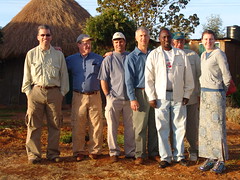
Tonight, they're staying at an NGO guesthouse of sorts, but no meals are served there. Starting tomorrow, they'll most likely be staying in a tent.
Please continue to pray for
- safety
- clarity in what God is asking them to do
- team unity
- good health
- an overwhelming love for the Sudanese
You can click on the photo to see one more photo of them at the airport.
I'll post updates if/whenever I hear from them.
"It's very, very dry."
Don just called. He says that they had a good but long day. "It was amazing flying over an hour over pure desert. No trees. No vegetation. The guy who cooked our meal tonight says that there isn't anyone growing any vegetables within 80 miles from where we are!"
Many of the refugees are returning to Sudan, but the situation is still rather hopeless. "They import EVERYTHING from Kenya. Food. Hardware supplies to rebuild homes. And everything's much more expensive here. A bag of cement that would sell for $8 in Kenya is more than $20 here. There are some cows, but people keep them for dowries. They're selling at about $400 each. And there are goats. Goat meat is the only thing they don't have to import. But people have no money! They cannot buy goods."
Tonight, the team had dinner at a construction site where USAID and the World Food Program is building a road to the north. As Don was relaying news to me, he could hear drums in the distance of some or other celebration.
When Don talked to Steven (ELI's guy in Sudan) about a week ago about the school we started, there were about 60 children. Today, there are 140! The school is at the site where ELI has about 50 acres of land, and the team will be visiting tomorrow. They'll also be talking about reforestation and meet with a Christian mission that runs a clinic in the area. "This far, we've been hearing mostly about the physical climate. Tomorrow, we'll find out more about the spiritual climate." They'll continue to meet mostly with nationals to determine the needs.
Around them are charred fields, dry grass, dirt and dust. "There's a lot of dry, dry grass. People are burning the grass because it's too tall, and so when rains come in April and May, new grass will germinate. Most people live along the road in grass thatch houses, because they cannot afford materials to build anything more."
It's very, very dry. The only water source are wells, and these are few and far between. People line up to draw water, and they often spend the night by the well, waiting for their turn. They area about 14 miles from the White Nile river.
Insofar as the team goes, Tom and Jim are tired (they're still getting over jet lag, having just arrived in East Africa a day ago!) Kevin's finding it very hot. But everyone's doing well.
"It's an exhilarating experience," said Don. "It's very different from Kenya!"
Please keep praying for the team!
Many of the refugees are returning to Sudan, but the situation is still rather hopeless. "They import EVERYTHING from Kenya. Food. Hardware supplies to rebuild homes. And everything's much more expensive here. A bag of cement that would sell for $8 in Kenya is more than $20 here. There are some cows, but people keep them for dowries. They're selling at about $400 each. And there are goats. Goat meat is the only thing they don't have to import. But people have no money! They cannot buy goods."
Tonight, the team had dinner at a construction site where USAID and the World Food Program is building a road to the north. As Don was relaying news to me, he could hear drums in the distance of some or other celebration.
When Don talked to Steven (ELI's guy in Sudan) about a week ago about the school we started, there were about 60 children. Today, there are 140! The school is at the site where ELI has about 50 acres of land, and the team will be visiting tomorrow. They'll also be talking about reforestation and meet with a Christian mission that runs a clinic in the area. "This far, we've been hearing mostly about the physical climate. Tomorrow, we'll find out more about the spiritual climate." They'll continue to meet mostly with nationals to determine the needs.
Around them are charred fields, dry grass, dirt and dust. "There's a lot of dry, dry grass. People are burning the grass because it's too tall, and so when rains come in April and May, new grass will germinate. Most people live along the road in grass thatch houses, because they cannot afford materials to build anything more."
It's very, very dry. The only water source are wells, and these are few and far between. People line up to draw water, and they often spend the night by the well, waiting for their turn. They area about 14 miles from the White Nile river.
Insofar as the team goes, Tom and Jim are tired (they're still getting over jet lag, having just arrived in East Africa a day ago!) Kevin's finding it very hot. But everyone's doing well.
"It's an exhilarating experience," said Don. "It's very different from Kenya!"
Please keep praying for the team!
Tuesday, February 14, 2006
Preparing to Head to Sudan
This week, ELI staff members Don Rogers, Samuel Teimuge and Juli McGowan are leaving for Sudan. With them are some American guests--Tom Hamick, Jim Mann, Steve Fitch and Kevin Robinson. The purpose of their journey is to visit ELI's newest site in Africa, in Southern Sudan. The site is near Bor. You can look it up on the CIA's World Factbook.
Other insightful Web sites on Sudan are the Wikipedia site as well as the BBC site.
Juli was pointing out that many of the children there have seen nothing but war for the past 21 years. And Don, Samuel and I were considering the other day how one can encourage pastors who, too, have seen nothing but difficulties for decades.
Some information from the CIA Factbook:
Military regimes favoring Islamic-oriented governments have dominated national politics since independence from the UK in 1956. Sudan was embroiled in two prolonged civil wars during most of the remainder of the 20th century. These conflicts were rooted in northern economic, political, and social domination of largely non-Muslim, non-Arab southern Sudanese. The first civil war ended in 1972, but broke out again in 1983. The second war and famine-related effects resulted in more than 4 million people displaced and, according to rebel estimates, more than 2 million deaths over a period of two decades.
Peace talks gained momentum in 2002-04 with the signing of several accords; a final Naivasha peace treaty of January 2005 granted the southern rebels autonomy for six years, after which a referendum for independence is scheduled to be held. A separate conflict that broke out in the western region of Darfur in 2003 has resulted in tens of thousands of deaths and nearly 2 million displaced; as of late 2005, peacekeeping troops were struggling to stabilize the situation.
Sudan also has faced large refugee influxes from neighboring countries, primarily Ethiopia and Chad, and armed conflict, poor transport infrastructure, and lack of government support have chronically obstructed the provision of humanitarian assistance to affected populations.
About the Team
The team will leave for Sudan by charter plane on Thursday morning, Kenya time. Steve and Kevin arrived in Kenya yesterday and in Eldoret this morning. Don and Samuel met them this morning, and they spent the day at our Kipkaren Training Center. This evening, the men and Juli were welcomed to our Ilula Training Center by our children.
Tomorrow, I will write more about each person's role on the team.
Other insightful Web sites on Sudan are the Wikipedia site as well as the BBC site.
Juli was pointing out that many of the children there have seen nothing but war for the past 21 years. And Don, Samuel and I were considering the other day how one can encourage pastors who, too, have seen nothing but difficulties for decades.
Some information from the CIA Factbook:
Military regimes favoring Islamic-oriented governments have dominated national politics since independence from the UK in 1956. Sudan was embroiled in two prolonged civil wars during most of the remainder of the 20th century. These conflicts were rooted in northern economic, political, and social domination of largely non-Muslim, non-Arab southern Sudanese. The first civil war ended in 1972, but broke out again in 1983. The second war and famine-related effects resulted in more than 4 million people displaced and, according to rebel estimates, more than 2 million deaths over a period of two decades.
Peace talks gained momentum in 2002-04 with the signing of several accords; a final Naivasha peace treaty of January 2005 granted the southern rebels autonomy for six years, after which a referendum for independence is scheduled to be held. A separate conflict that broke out in the western region of Darfur in 2003 has resulted in tens of thousands of deaths and nearly 2 million displaced; as of late 2005, peacekeeping troops were struggling to stabilize the situation.
Sudan also has faced large refugee influxes from neighboring countries, primarily Ethiopia and Chad, and armed conflict, poor transport infrastructure, and lack of government support have chronically obstructed the provision of humanitarian assistance to affected populations.
About the Team
The team will leave for Sudan by charter plane on Thursday morning, Kenya time. Steve and Kevin arrived in Kenya yesterday and in Eldoret this morning. Don and Samuel met them this morning, and they spent the day at our Kipkaren Training Center. This evening, the men and Juli were welcomed to our Ilula Training Center by our children.
Tomorrow, I will write more about each person's role on the team.
Monday, February 13, 2006
ELI Expands its Ministry into Sudan
Late in 2005, ELI expanded its ministry to Southern Sudan. From our ministry website, here's why and how:
I am still confident of this: I will see the goodness of the Lord in the land of the living. Wait for the Lord; be strong and take heart and wait for the Lord.
Psalm 27: 13 and 14
These are powerful words written by David during times of war and turmoil. They breathe hope and forecast a future of goodness when we wait, take heart, and move with a peace and courage that He provides to His people.
War has become a way of life for the people of Southern Sudan. Many have been wandering from one place to another for years – looking for a place of peace and longing to come home. The signing of the transitional constitution has opened up a new chapter in the life of Sudan and Christian nationals are holding prayer meetings of praise in refugee camps, Kenya, and wherever they may be found. Many are now making plans to go “home.”
God has opened up and confirmed opportunities for ELI to move as well. With God’s help and your prayers and support we are launching our work and ministry in Southern Sudan. We have seen the hand of God connecting pieces and people in miraculous ways and believe that this opportunity to enter and minister in the Bor region is crucial to the children, orphans, and people God is leading us to serve and empower. Various religious groups are very eager to evangelize all of Southern Sudan and are moving money in that direction to build schools, Mosques, and food programs in order to capture the attention and affections of the people. In January of 2005, a peace agreement was signed that put in motion a six year political transition period. This time is pivotal for the nation as various groups work diligently to move the hearts and minds of the people in their direction. Pray for and partner with us as we follow God’s lead to reach the lost and empower the poor during this crucial time of transition.
We already have much to thank God for and even more to pray about. There are several strategic developments that God is leading us to accomplish.
1. We will address the challenge of health, hunger, and poverty.
21 years of war in Sudan has left this area with few resources and fewer effective Christian leaders. People are cultivating their land using sticks because hoes and other farming implements are so scarce. Ideas or inspiration for lifting lives out of the poverty that is choking the physical and spiritual lives of the people have faded with time and could soon die completely. Empowering Lives Sudan will this year respond to the urgent need for spiritual and physical empowerment. Songs and words of hope are returning slowly but words must be demonstrated in action for people to again trust that the future can be different than the past.
The abject poverty and lack of food or sound agricultural practices are some of the reasons we will be initiating our efforts in Southern Sudan by establishing a Christian demonstration farm and Training Center. Ideas for primary health care (AIDS prevention), business, agriculture, and animal raising can make all the difference for the people yet to acquire such skills.
We aim to bring some of the best, appropriate ideas and technologies to the rural areas in order to bring food security and economic progress to the lives of suffering Christians and villagers in the country. There will be some need for relief efforts in the area but our main aim will be to move people towards self sustainability and food security.
One religious leader, Rev. Janda, wrote in the Sudan Mirror that within a few days of their return to the Sudan, it will be inevitable for the people to rely on handouts: “We must take deliberate steps to wean ourselves away from the slavery of food hand outs. That is not going to be easy, but it must be done. Each family must impose some discipline to stay clear of the tendency to live perpetually on relief food.”
Moving people’s hands, hearts, and minds to effective methods of sustainable agriculture and animal husbandry is possible. Our success and experience in other African countries as well as the Sudan leadership we have been working with for over a year now has confirmed that we are on the right track, moving in the right direction to empower the needy.
2. We will participate in God’s care for the environment.
Addressing the environmental needs of the area is a priority. Establishing a reforestation movement to provide for the cooking and construction needs is vital as more Sudanese return home and the population increases. Appropriate trees for providing food, fuel, and building materials will be the first seedlings in the tree nursery; ready for planting when the anticipated rainy season begins January 2006.
3. We will address the Spiritual needs of the people.
Woven into all sessions, whether dealing with agriculture or spiritual trainings, will be the message of Christ and His desires and dreams for our lives and futures. This Training Center will become the hub for our evangelistic efforts, training Christians in spiritual growth and economic/farming endeavors. The center will host church leadership training sessions and Skills-For-Life Seminars for church members and others in the surrounding villages who seek to grow spiritually and gain ideas to break the cycle of poverty.
We pray that our sound relationships with the local leaders, churches, and officials will lead to a multiplication of healthy churches, Christian leaders, and outreach ministries. The center will emphasize the Gospel message and integrate spiritual encouragement and discipleship with ideas to help break the cycle of poverty. We have targeted to have our first Christian leadership trainings take place as soon as November 2005.
4. We will work to rise up and empower national leadership.
It is amazing to see the Sudanese leadership being brought to us for this ministry movement into the Sudan. The lead director is a Sudanese who comes from a family line of village chiefs. His older step brother is the chief of the area where ELS will locate and where his family has enthusiastically welcomed him. The village where our efforts will be based is located in Southern Sudan near Bor, on the Upper Nile River.
Empowering Lives Sudan is now registered with the government and is positioned to begin carrying out our ministry objectives as soon as funding is available. A Sudanese Christian learned of the ministry of Empowering Lives Sudan and has donated 50 acres of land for cause. In June of 2005 we fenced a portion of the land and constructed the first structure for phase one. Construction of the necessary buildings for the demonstration farm will continue through 2005.
5. We will build hope for orphans and vulnerable children.
As our staff surveyed the possibilities for ministry early this year the needs of thousands of vulnerable children cried out for attention and resolution. Children live by the hundreds in “cattle camps” where they survive in a parentless environment by drinking the milk and or blood from grazing cows. These children, many whom are orphans, move from one day to the next with only the day’s survival in mind. They have no hope for education of any kind and no role models other than older siblings, many of whom were abducted by soldier groups, given guns, and forced into a battle they still do not understand. There is no parental supervision or love. There is never adequate food. Even the children who are not in the cattle camps live without adequate nutrition, drink contaminated water, and, because the schools were closed or destroyed over the past 21 years, have had no opportunity to learn.
One candle makes the darkness flee. Though we may not be able to change the whole world, we can change the whole world for one child… and then another! That is our aim in establishing a Christian School by January 2006. The school will be established primarily with the orphan in mind but will also educate other vulnerable children that are within walking distance from the surrounding village. We aim to share God’s love, educate, feed, and train these children in all of the Skills for Life ideas available at the neighboring ELS Training Center. The children who come from the village will be encouraged to establish the same vegetable gardens at their homes. Relationships with the parents and community will be encouraged through the children as we promote ideas for water purification, nutrition, sanitation, and spiritual growth.
Phase Two will begin by adding a boarding facility and staff to the school, providing love, hope, and an education for the many orphans in the area. Some will come from cattle camps or homes where the child is unloved or slowly dying due to negligence. If funding is available, the construction of the school will begin in October of 2005. The Christian Primary School will be placed next to the demonstration farm and will be our strong arm for caring for orphans in the school as well as establishing a support program for hundreds of other children and/or guardians of orphans in the region. Future plans will include a Teachers Training College and Secondary School.
6. We will invite and involve people from across the world to invest in this important mission.
We care deeply about the spiritual growth and expansion of the Christian Church in Southern Sudan. The abject poverty that surrounds the people, including Christians, maintains a chokehold on their ability to meet the daily necessities of the family, and limits the ability to support the pastor or church outreach programs. God desires that we speak about His love for the world and to show that love in action (1 John 3:16-18). Hosea 4:6 says “My people perish for lack of knowledge.” People in the Bor (Kolmarek) area are perishing yet there is great hope and opportunity!
These are exciting, in fact pivotal days. We are dedicated to working diligently alongside the people as soon as possible in order to achieve measurable results that will impact the greatest number. We invite your prayers, personal and church involvement, and investments in this country and ministry as we seek to empower the lives of the lost and needy for the glory of God and the building of His Kingdom.
Together we can make a world of difference!
I am still confident of this: I will see the goodness of the Lord in the land of the living. Wait for the Lord; be strong and take heart and wait for the Lord.
Psalm 27: 13 and 14
These are powerful words written by David during times of war and turmoil. They breathe hope and forecast a future of goodness when we wait, take heart, and move with a peace and courage that He provides to His people.
War has become a way of life for the people of Southern Sudan. Many have been wandering from one place to another for years – looking for a place of peace and longing to come home. The signing of the transitional constitution has opened up a new chapter in the life of Sudan and Christian nationals are holding prayer meetings of praise in refugee camps, Kenya, and wherever they may be found. Many are now making plans to go “home.”
God has opened up and confirmed opportunities for ELI to move as well. With God’s help and your prayers and support we are launching our work and ministry in Southern Sudan. We have seen the hand of God connecting pieces and people in miraculous ways and believe that this opportunity to enter and minister in the Bor region is crucial to the children, orphans, and people God is leading us to serve and empower. Various religious groups are very eager to evangelize all of Southern Sudan and are moving money in that direction to build schools, Mosques, and food programs in order to capture the attention and affections of the people. In January of 2005, a peace agreement was signed that put in motion a six year political transition period. This time is pivotal for the nation as various groups work diligently to move the hearts and minds of the people in their direction. Pray for and partner with us as we follow God’s lead to reach the lost and empower the poor during this crucial time of transition.
We already have much to thank God for and even more to pray about. There are several strategic developments that God is leading us to accomplish.
1. We will address the challenge of health, hunger, and poverty.
21 years of war in Sudan has left this area with few resources and fewer effective Christian leaders. People are cultivating their land using sticks because hoes and other farming implements are so scarce. Ideas or inspiration for lifting lives out of the poverty that is choking the physical and spiritual lives of the people have faded with time and could soon die completely. Empowering Lives Sudan will this year respond to the urgent need for spiritual and physical empowerment. Songs and words of hope are returning slowly but words must be demonstrated in action for people to again trust that the future can be different than the past.
The abject poverty and lack of food or sound agricultural practices are some of the reasons we will be initiating our efforts in Southern Sudan by establishing a Christian demonstration farm and Training Center. Ideas for primary health care (AIDS prevention), business, agriculture, and animal raising can make all the difference for the people yet to acquire such skills.
We aim to bring some of the best, appropriate ideas and technologies to the rural areas in order to bring food security and economic progress to the lives of suffering Christians and villagers in the country. There will be some need for relief efforts in the area but our main aim will be to move people towards self sustainability and food security.
One religious leader, Rev. Janda, wrote in the Sudan Mirror that within a few days of their return to the Sudan, it will be inevitable for the people to rely on handouts: “We must take deliberate steps to wean ourselves away from the slavery of food hand outs. That is not going to be easy, but it must be done. Each family must impose some discipline to stay clear of the tendency to live perpetually on relief food.”
Moving people’s hands, hearts, and minds to effective methods of sustainable agriculture and animal husbandry is possible. Our success and experience in other African countries as well as the Sudan leadership we have been working with for over a year now has confirmed that we are on the right track, moving in the right direction to empower the needy.
2. We will participate in God’s care for the environment.
Addressing the environmental needs of the area is a priority. Establishing a reforestation movement to provide for the cooking and construction needs is vital as more Sudanese return home and the population increases. Appropriate trees for providing food, fuel, and building materials will be the first seedlings in the tree nursery; ready for planting when the anticipated rainy season begins January 2006.
3. We will address the Spiritual needs of the people.
Woven into all sessions, whether dealing with agriculture or spiritual trainings, will be the message of Christ and His desires and dreams for our lives and futures. This Training Center will become the hub for our evangelistic efforts, training Christians in spiritual growth and economic/farming endeavors. The center will host church leadership training sessions and Skills-For-Life Seminars for church members and others in the surrounding villages who seek to grow spiritually and gain ideas to break the cycle of poverty.
We pray that our sound relationships with the local leaders, churches, and officials will lead to a multiplication of healthy churches, Christian leaders, and outreach ministries. The center will emphasize the Gospel message and integrate spiritual encouragement and discipleship with ideas to help break the cycle of poverty. We have targeted to have our first Christian leadership trainings take place as soon as November 2005.
4. We will work to rise up and empower national leadership.
It is amazing to see the Sudanese leadership being brought to us for this ministry movement into the Sudan. The lead director is a Sudanese who comes from a family line of village chiefs. His older step brother is the chief of the area where ELS will locate and where his family has enthusiastically welcomed him. The village where our efforts will be based is located in Southern Sudan near Bor, on the Upper Nile River.
Empowering Lives Sudan is now registered with the government and is positioned to begin carrying out our ministry objectives as soon as funding is available. A Sudanese Christian learned of the ministry of Empowering Lives Sudan and has donated 50 acres of land for cause. In June of 2005 we fenced a portion of the land and constructed the first structure for phase one. Construction of the necessary buildings for the demonstration farm will continue through 2005.
5. We will build hope for orphans and vulnerable children.
As our staff surveyed the possibilities for ministry early this year the needs of thousands of vulnerable children cried out for attention and resolution. Children live by the hundreds in “cattle camps” where they survive in a parentless environment by drinking the milk and or blood from grazing cows. These children, many whom are orphans, move from one day to the next with only the day’s survival in mind. They have no hope for education of any kind and no role models other than older siblings, many of whom were abducted by soldier groups, given guns, and forced into a battle they still do not understand. There is no parental supervision or love. There is never adequate food. Even the children who are not in the cattle camps live without adequate nutrition, drink contaminated water, and, because the schools were closed or destroyed over the past 21 years, have had no opportunity to learn.
One candle makes the darkness flee. Though we may not be able to change the whole world, we can change the whole world for one child… and then another! That is our aim in establishing a Christian School by January 2006. The school will be established primarily with the orphan in mind but will also educate other vulnerable children that are within walking distance from the surrounding village. We aim to share God’s love, educate, feed, and train these children in all of the Skills for Life ideas available at the neighboring ELS Training Center. The children who come from the village will be encouraged to establish the same vegetable gardens at their homes. Relationships with the parents and community will be encouraged through the children as we promote ideas for water purification, nutrition, sanitation, and spiritual growth.
Phase Two will begin by adding a boarding facility and staff to the school, providing love, hope, and an education for the many orphans in the area. Some will come from cattle camps or homes where the child is unloved or slowly dying due to negligence. If funding is available, the construction of the school will begin in October of 2005. The Christian Primary School will be placed next to the demonstration farm and will be our strong arm for caring for orphans in the school as well as establishing a support program for hundreds of other children and/or guardians of orphans in the region. Future plans will include a Teachers Training College and Secondary School.
6. We will invite and involve people from across the world to invest in this important mission.
We care deeply about the spiritual growth and expansion of the Christian Church in Southern Sudan. The abject poverty that surrounds the people, including Christians, maintains a chokehold on their ability to meet the daily necessities of the family, and limits the ability to support the pastor or church outreach programs. God desires that we speak about His love for the world and to show that love in action (1 John 3:16-18). Hosea 4:6 says “My people perish for lack of knowledge.” People in the Bor (Kolmarek) area are perishing yet there is great hope and opportunity!
These are exciting, in fact pivotal days. We are dedicated to working diligently alongside the people as soon as possible in order to achieve measurable results that will impact the greatest number. We invite your prayers, personal and church involvement, and investments in this country and ministry as we seek to empower the lives of the lost and needy for the glory of God and the building of His Kingdom.
Together we can make a world of difference!
Subscribe to:
Posts (Atom)